Signal Decay
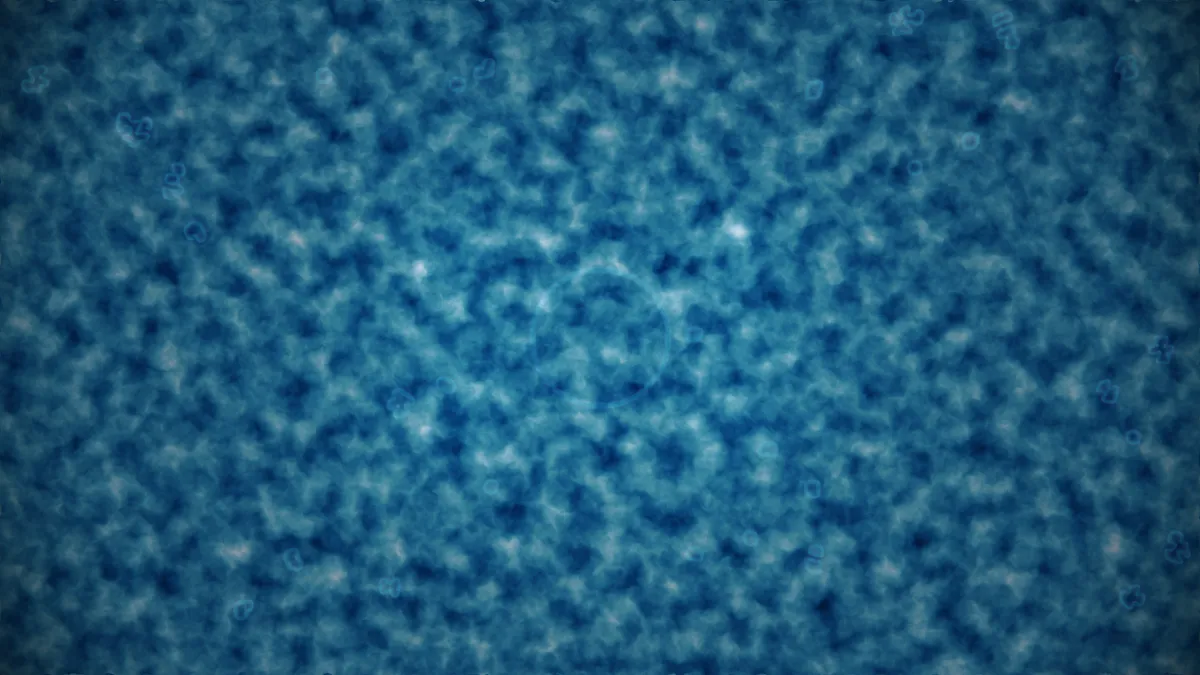
The Emergent Composition Framework
The Emergent Composition Framework is a generative art system built in Python that introduces composition-aware emergence, a feedback loop with cellular automata, reaction-diffusion systems, strange attractors, and other self-organising processes that receive real-time aesthetic evaluation as they evolve, steering chaotic dynamics toward compositionally strong results.
The framework, built in Python, layers multiple generative systems (space colonisation, physarum simulation, Voronoi tessellation, flow fields, chaos games, L-system fractals) through a blend-mode compositing pipeline, guided by classical composition grids (e.g., golden ratio, rule of thirds, golden spiral) and is validated by saliency detection and complexity analysis.
Rather than separating creation from curation, it unifies them: emergence and aesthetics inform each other continuously, producing work that is both algorithmically emergent and visually intentional.
Signal Decay
Each piece depicts a different type of transmission degrading across vast distance. The series traces a colour temperature arc from cold digital blues (clean signal) through transitional purples to warm amber/orange (analog noise), visualising the moment where structured information dissolves into entropy.
Each variation composites four independent generative systems into a single image through a multi-layer blending pipeline:
Layer 1: Domain-Warped Signal (hero layer)
A full-resolution recursive domain warp. Perlin noise is fed back into itself over multiple iterations, creating complex interference-like patterns that serve as the primary “transmission” visual. Colourised through a named palette and blended via screen + add modes for luminous, additive presence on the dark background.
Scale: Spatial frequency of the warp pattern
Strength: Displacement magnitude in pixels
Iterations: Recursive depth; more iterations = more distorted/degraded signal
Layer 2: Reaction-Diffusion Noise Floor
A Gray-Scott reaction-diffusion system evolved at quarter-resolution, then upscaled via cubic interpolation. Seeded with turbulence noise for organic, artifact-free Turing patterns. The RD field represents entropy consuming the signal and its opacity and prominence increase across the series as signals degrade.
Feed rate: Controls pattern type (spots, worms, mazes)
Kill rate: Pattern density and connectivity
Steps: Evolution time
Seed density: Fraction of canvas initially activated
Layer 3: Curl Noise EM Drift
Divergence-free curl noise flow lines traced as particle paths through a vector field. These represent electromagnetic drift with faint luminous threads of energy dispersing from the signal source. Line count and length increase across the series as the electromagnetic environment becomes more turbulent.
Layer 4: Atmospheric Depth
An FBM noise field (billowed, turbulence, or ridged variant) colourised and composited at low opacity as the base atmosphere. Provides spatial depth beneath the signal and noise layers.
Composition Grid Weighting
A composition grid (golden ratio, golden spiral, triangular, rule of thirds, or diagonal) providing focal points. The signal layer’s brightness is spatially modulated by a Gaussian distance-weighted map so that signal structure is strongest near compositionally significant regions.
Layer Composite (LayerStack)
All layers are blended in sequence:
-
Atmosphere: Normal mode, low opacity (depth base)
-
Signal (grid-weighted): Screen mode (luminous signal structure)
-
Signal (grid-weighted): Add mode (bright peak emphasis)
-
Reaction-diffusion: Screen mode (entropy overlay)
-
Curl noise: Screen mode (EM drift traces)
-
Curl noise: Add mode (bright flow emphasis)
-
Colour gradient: Soft_light mode (atmospheric wash)
-
Vignette: Mid strength and radius (edge darkening)
Post-Processing Effects
Glow: Gaussian blur on bright regions (threshold, intensity, and sigma vary per piece), producing luminous halos around signal structures
Chromatic aberration: Radial RGB channel separation (offset increases across the series), simulating lens degradation
Film grain: Monochrome noise (intensity increases across series), adding analog texture
Motion blur: Optional directional blur on select variations, suggesting signal drift
Saliency Verification
After generation, MultiMethodSaliency analyzes the final composite to detect the 3 strongest focal points, compared against composition grid targets to verify visual weight alignment.
Variations
1. Voice
| Parameter | Value |
|---|---|
| Signal | ocean palette, opacity 0.85 |
| Domain warp | scale 0.005, strength 30, 2 iterations |
| RD noise | f=0.055, k=0.062, 800 steps |
| Curl | 8000 lines, ocean palette |
| Atmosphere | billowed, ocean |
| Grid | Golden ratio |
| Glow | threshold 0.55, sigma 35 |
| Chromatic | 0.0008 offset |
| Grain | 2% |
The cleanest signal in the series. Soft blue domain-warped clouds suggest intimate human speech patterns drifting through a cold medium. Minimal RD noise and restrained glow preserve the signal’s clarity. The billowed atmospheric layer adds gentle depth without competing with the signal structure.
2. Music
| Parameter | Value |
|---|---|
| Signal | ocean palette, opacity 0.80 |
| Domain warp | scale 0.004, strength 40, 3 iterations |
| RD noise | f=0.050, k=0.065, 900 steps |
| Curl | 10000 lines, ocean palette |
| Atmosphere | turbulence, cosmic |
| Grid | Golden spiral |
| Glow | threshold 0.50, sigma 40 |
| Chromatic | 0.001 offset |
| Grain | 2.5% |
Deeper blue tones with stronger domain warping creating more complex interference. The turbulence atmospheric layer adds sharper textural depth beneath the signal. The golden spiral grid guides visual weight along a natural curve, evoking harmonic structure. Slightly more RD noise than Voice, beginning the entropic progression.
3. Heartbeat
| Parameter | Value |
|---|---|
| Signal | cosmic palette, opacity 0.75 |
| Domain warp | scale 0.006, strength 35, 2 iterations |
| RD noise | f=0.058, k=0.060, 1000 steps |
| Curl | 9000 lines, cosmic palette |
| Atmosphere | billowed, ocean |
| Grid | Triangular composition |
| Glow | threshold 0.48, sigma 45 |
| Chromatic | 0.0012 offset |
| Grain | 3% |
The colour temperature shifts from blue to purple/teal as the cosmic palette replaces ocean. The RD noise floor becomes more prominent, with organic Turing patterns beginning to intrude on the signal. The triangular composition creates three focal zones suggesting a rhythmic biological pulse. Wider glow halos wrap the signal in soft luminance.
4. Radar
| Parameter | Value |
|---|---|
| Signal | ocean palette, opacity 0.80 |
| Domain warp | scale 0.003, strength 40, 3 iterations |
| RD noise | f=0.045, k=0.065, 700 steps |
| Curl | 6000 lines, cosmic palette |
| Atmosphere | ridged, ocean |
| Grid | Diagonal dominance |
| Glow | threshold 0.52, sigma 30 |
| Chromatic | 0.0006 offset |
| Grain | 2% |
| Motion blur | horizontal, length 8 |
The most restrained piece. Low warp scale produces broad, smooth signal features. Ridged atmospheric noise adds sharp linear texture evoking radar sweep lines. Diagonal composition creates dynamic tension. Minimal chromatic aberration and the tightest glow sigma give it a precise, technical quality. Subtle horizontal motion blur suggests a scanning beam.
5. Pulsar
| Parameter | Value |
|---|---|
| Signal | cosmic palette, opacity 0.65 |
| Domain warp | scale 0.005, strength 45, 3 iterations |
| RD noise | f=0.052, k=0.063, 1100 steps |
| Curl | 12000 lines, cosmic palette |
| Atmosphere | turbulence, cosmic |
| Grid | Golden ratio |
| Glow | threshold 0.42, sigma 50 |
| Chromatic | 0.0015 offset |
| Grain | 3.5% |
The transitional piece between cold and warm. Deep purple/teal cosmic tones. Signal opacity drops to 0.65 as the RD noise floor rises and the entropy is gaining ground. Higher curl noise density creates more visible EM drift. Lower glow threshold means more of the image radiates, suggesting a signal source of immense but fading power.
6. Solar Wind
| Parameter | Value |
|---|---|
| Signal | sunset palette, opacity 0.55 |
| Domain warp | scale 0.006, strength 55, 3 iterations |
| RD noise | f=0.048, k=0.060, 1200 steps |
| Curl | 14000 lines, sunset palette |
| Atmosphere | billowed, sunset |
| Grid | Golden spiral |
| Glow | threshold 0.40, sigma 55 |
| Chromatic | 0.002 offset |
| Grain | 4% |
| Motion blur | 0.3 rad, length 10 |
The first warm piece. Sunset palette replaces cosmic across all layers, creating a cohesive golden/amber world. The RD Turing patterns at these feed/kill rates produce intricate maze-like structures that read as solar plasma turbulence. Strong glow wraps everything in luminous halos. Directional motion blur suggests solar wind streaming. The golden spiral guides the eye through cascading plasma formations.
7. Black Hole
| Parameter | Value |
|---|---|
| Signal | fire palette, opacity 0.45 |
| Domain warp | scale 0.007, strength 70, 4 iterations |
| RD noise | f=0.055, k=0.063, 1000 steps |
| Curl | 15000 lines, fire palette |
| Atmosphere | ridged, fire |
| Grid | Triangular composition |
| Glow | threshold 0.38, sigma 60 |
| Chromatic | 0.0025 offset |
| Grain | 4.5% |
Maximum domain warp depth through multiple iterations at high strength creates severely distorted signal patterns with the gravitational lensing of information falling toward an event horizon. Fire palette across all layers produces deep amber and orange. The RD noise creates organic, amorphous boundary outlines suggesting matter being torn apart. Ridged atmospheric texture adds sharp accretion-disk structure. The widest glow sigma yet produces expansive luminous halos.
8. Alien Beacon
| Parameter | Value |
|---|---|
| Signal | sunset palette, opacity 0.55 |
| Domain warp | scale 0.008, strength 80, 4 iterations |
| RD noise | f=0.042, k=0.065, 1100 steps |
| Curl | 16000 lines, sunset palette |
| Atmosphere | turbulence, fire |
| Grid | Rule of thirds |
| Glow | threshold 0.35, sigma 55 |
| Chromatic | 0.003 offset |
| Grain | 5% |
| Motion blur | 0.5 rad, length 12 |
A signal from an unknown source, partially decoded. Heavy domain warping creates alien interference patterns. The RD noise produces scattered bright dot-clusters with fragments of recognisable structure in a sea of entropy. High chromatic aberration and film grain suggest extreme transmission degradation. Diagonal motion blur implies a drifting, tumbling source.
9. Cosmic Background
| Parameter | Value |
|---|---|
| Signal | fire palette, opacity 0.40 |
| Domain warp | scale 0.009, strength 90, 4 iterations |
| RD noise | f=0.035, k=0.065, 1200 steps |
| Curl | 18000 lines, fire palette |
| Atmosphere | billowed, sunset |
| Grid | Golden ratio |
| Glow | threshold 0.30, sigma 65 |
| Chromatic | 0.004 offset |
| Grain | 6% |
The oldest signal in the universe, almost entirely consumed by entropy. The lowest signal opacity and highest warp parameters mean the original transmission is barely recognisable. The RD noise at very low feed rate produces sparse, scattered remnant spots with embers of information in a warm amber void. Maximum chromatic aberration, grain, and glow create the most degraded, analog-feeling image. The series finale: what remains when a signal has crossed the observable universe.
Technical Summary
| Constant | Value |
|---|---|
| Resolution | 7680 x 4320 pixels (8K UHD) |
| DPI | 300 |
| RD simulation scale | 0.25x (quarter-resolution, cubic upscale) |
| Blend layers per image | 8 |
| Effects | Glow + chromatic aberration + film grain (+ optional motion blur) |
| Output format | PNG (lossless) |
Parameter Progression Across Series
| Parameter | #1 Voice | #5 Pulsar | #9 Cosmic BG | Trend |
|---|---|---|---|---|
| Signal opacity | 0.85 | 0.65 | 0.40 | Decreasing (signal fades) |
| Warp strength | 30 | 45 | 90 | Increasing (more distortion) |
| RD opacity | 0.25 | 0.40 | 0.50 | Increasing (entropy grows) |
| Curl lines | 8000 | 12000 | 18000 | Increasing (EM turbulence) |
| Chromatic offset | 0.0008 | 0.0015 | 0.004 | Increasing (lens degradation) |
| Grain intensity | 2% | 3.5% | 6% | Increasing (analog noise) |
| Glow threshold | 0.55 | 0.42 | 0.30 | Decreasing (more glow) |
| Palette | ocean | cosmic | fire | Cold to warm |
Parameter Coverage Across Series
| Signal Palette | Variations |
|---|---|
| ocean | #1, #2, #4 |
| cosmic | #3, #5 |
| sunset | #6, #8 |
| fire | #7, #9 |
| Atmosphere Noise | Variations |
|---|---|
| Billowed | #1, #3, #6, #9 |
| Turbulence | #2, #5, #8 |
| Ridged | #4, #7 |
| Composition Grid | Variations |
|---|---|
| Golden ratio | #1, #5, #9 |
| Golden spiral | #2, #6 |
| Triangular | #3, #7 |
| Diagonal | #4 |
| Rule of thirds | #8 |