Strange Cartography
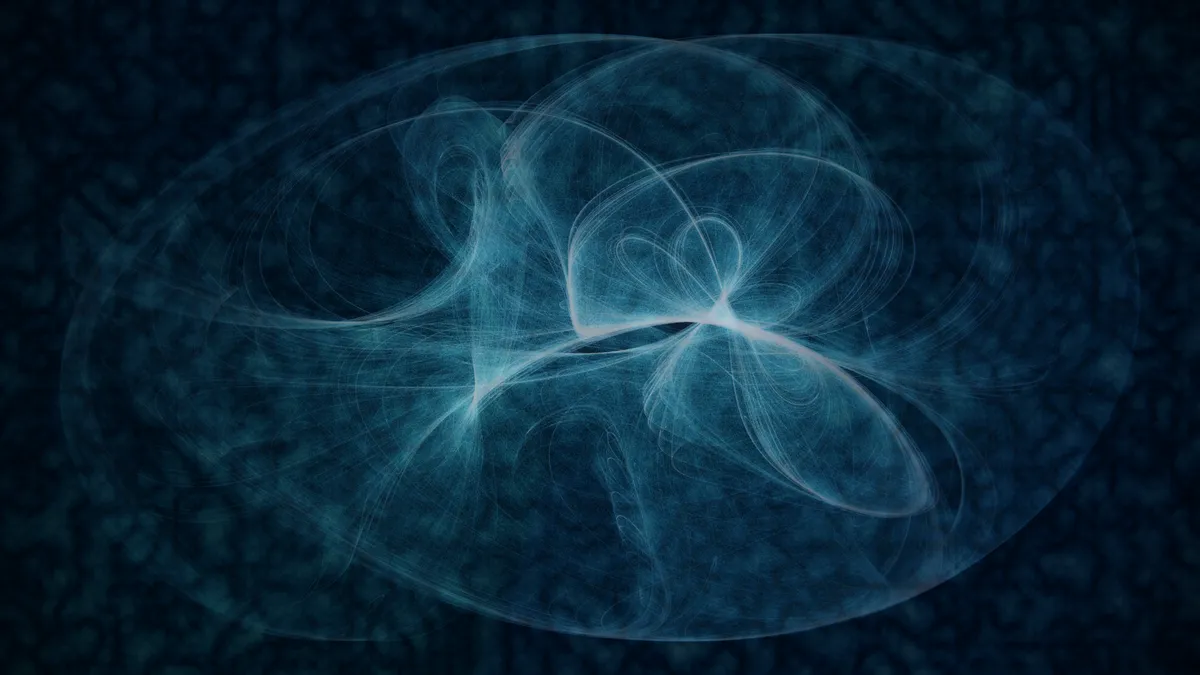
The Emergent Composition Framework
The Emergent Composition Framework is a generative art system built in Python that introduces composition-aware emergence, a feedback loop with cellular automata, reaction-diffusion systems, strange attractors, and other self-organising processes that receive real-time aesthetic evaluation as they evolve, steering chaotic dynamics toward compositionally strong results.
The framework, built in Python, layers multiple generative systems (space colonisation, physarum simulation, Voronoi tessellation, flow fields, chaos games, L-system fractals) through a blend-mode compositing pipeline, guided by classical composition grids (e.g., golden ratio, rule of thirds, golden spiral) and is validated by saliency detection and complexity analysis.
Rather than separating creation from curation, it unifies them: emergence and aesthetics inform each other continuously, producing work that is both algorithmically emergent and visually intentional.
Strange Cartography
Each variation uses the artist’s Emergent Composition Framework to composite three independent generative systems into a single image through a 6-layer blending pipeline.
Generative System 1: Terrain (FBM Noise)
A full-resolution noise field generated by FBMNoise using one of three variants:
Ridged multifractal: Sharp mountain-ridge textures with weighted octave feedback
Billowed: Soft, cloud-like formations (absolute value of Perlin noise)
Turbulence: Sharp-edged erosion patterns
The noise field is colourised through a named palette (earth, ocean, cosmic, etc.) and serves as the base terrain layer.
Generative System 2: Strange Attractor (8 million points, 8 rendering passes)
A chaotic dynamical system iterated 8,000,000 times to produce a dense point cloud. The point cloud is accumulated into a density histogram, gamma-corrected for contrast, and colourised. Three attractor types are used across the series:
Clifford attractor
2D system: x' = sin(a·y) + c·cos(a·x), y' = sin(b·x) + d·cos(b·y)
De Jong attractor
2D system: x' = sin(a·y) - cos(b·x), y' = sin(c·x) - cos(d·y)
Thomas attractor
3D dissipative system: x' = sin(y) - b·x, y' = sin(z) - b·y, z' = sin(x) - b·z
The attractor’s mean luminance is also extracted as a density map to modulate the Voronoi layer.
Generative System 3: Voronoi Tessellation (Poisson disc sampling, 8 Lloyd iterations)
Points are distributed via Poisson disc sampling (minimum distance constraint for organic spacing), then refined through 8 iterations of Lloyd relaxation (moving each point to its cell centroid). The resulting Voronoi diagram is rendered in one of four styles: cells, edges, combined, or stippled and colourised. Cell brightness is modulated by the attractor density map:
voronoi × (0.4 + 0.6 × attractor_density)Composition Grid Weighting
A composition grid (triangular, golden ratio, golden spiral, rule of thirds, or diagonal) provides focal points. A Gaussian distance-weighted map is computed from these focal points, and the attractor layer’s opacity is spatially modulated so that attractor traces are brightest near compositionally significant regions.
6-Layer Composite (LayerStack)
All layers are blended in sequence:
| Layer | Mode | Opacity | Role |
|---|---|---|---|
| 1. Terrain | Normal | 1.0 | Base |
| 2. Voronoi (density-modulated) | Hard Light | 0.7 | Structured overlay |
| 3. Attractor (grid-weighted) | Screen | 0.55 | Luminous traces |
| 4. Attractor (grid-weighted) | Add | 0.18 | Bright peak emphasis |
| 5. Colour Gradient | Soft Light | 0.25 | Atmospheric colour wash |
| 6. Vignette | Multiply | 0.5 (strength), 0.7 (radius) | Edge darkening |
Post-Processing Effects
Glow: Gaussian blur on bright regions (threshold and sigma vary per piece), blended additively for luminous halos around attractor curves
Chromatic Aberration: 0.001 offset, radial direction, separating RGB channels slightly toward edges for a lens-like effect
Film Grain: 3% intensity, grain size 3.0 pixels, monochrome noise for analogue texture
Saliency Verification
After generation, MultiMethodSaliency analyses the final composite to detect the 3 strongest focal points. These are compared against the composition grid targets to verify that the attractor traces align with the intended compositional structure.
Variations
1. Infernal Cartography
| Parameter | Value |
|---|---|
| Attractor | Clifford (a=−1.4, b=1.6, c=1.0, d=0.7) |
| Palettes | fire (attractor) + ocean (Voronoi) + earth (terrain) |
| Terrain | Ridged multifractal, scale 0.006, 7 octaves |
| Voronoi | 300 points, cells style |
| Grid | Triangular composition |
| Gamma | 0.35 |
| Glow | threshold 0.5, sigma 40 |
Infernal Cartography was produced first and set the reference variation. The Clifford attractor produces sweeping double-lobed curves in warm gold and amber tones. The earth-toned ridged terrain provides a richly textured substrate with visible vein-like ridgelines. Ocean-palette Voronoi cells add subtle blue-tinted geographic regions. The triangular composition concentrates attractor luminosity at three focal points, creating a balanced visual triangle.
2. Azure Drift
| Parameter | Value |
|---|---|
| Attractor | De Jong (a=-2.1, b=1.4, c=-1.8, d=2.0) |
| Palettes | aurora (attractor) + cosmic (Voronoi) + ocean (terrain) |
| Terrain | Billowed, scale 0.003, 6 octaves |
| Voronoi | 200 points, edges style |
| Grid | Golden spiral |
| Gamma | 0.30 |
| Glow | threshold 0.35, sigma 50 |
| Blend overrides | screen 0.70, add 0.30 |
A cool-toned, atmospheric piece. The De Jong attractor creates a complex, asymmetric web of overlapping leaf-like curves in pale lavender and cyan. The billowed ocean terrain produces soft, cloud-like depth beneath. Voronoi edges (rather than filled cells) add geometric structure without occluding the attractor. The golden spiral grid pushes visual weight along a logarithmic curve from center outward. The higher glow sigma (50) produces wide, soft halos that give the attractor traces an ethereal, bioluminescent quality.
3. Emerald Topology
| Parameter | Value |
|---|---|
| Attractor | Clifford (a=−1.3, b=−1.3, c=−1.8, d=−1.9) |
| Palettes | forest (attractor) + earth (Voronoi) + forest (terrain) |
| Terrain | Turbulence, scale 0.007, 5 octaves |
| Voronoi | 400 points, cells style |
| Grid | Golden ratio |
| Gamma | 0.34 |
| Glow | threshold 0.55, sigma 35 |
A monochromatic green study. All-negative Clifford parameters produce a wide, spread attractor with intersecting elliptical orbits in emerald and gold. The turbulence terrain creates sharp erosion-channel textures. With 400 Voronoi cells (the densest in the series), the geographic structure is fine-grained. The golden ratio grid provides classical focal point placement. The higher glow threshold means only the brightest attractor intersections glow, keeping the terrain texture visible.
4. Neon Meridian
| Parameter | Value |
|---|---|
| Attractor | De Jong (a=1.4, b=−2.3, c=2.4, d=−2.1) |
| Palettes | neon (attractor) + cosmic (Voronoi) + cosmic (terrain) |
| Terrain | Ridged multifractal, scale 0.005, 6 octaves |
| Voronoi | 250 points, combined style (cells + edges) |
| Grid | Diagonal dominance |
| Gamma | 0.36 |
| Glow | threshold 0.4, sigma 55 |
The most vibrant piece in the series. The De Jong attractor with large opposing parameters produces a dramatic fan-shaped form in electric purple and pink. The neon palette pushes saturation to its limit against the dark cosmic terrain. Combined Voronoi style (both filled cells and edge lines) creates a layered geographic feel. The diagonal composition grid creates dynamic tension along diagonal axes. The lowest glow threshold and highest sigma produce the widest, most prominent luminous halos.
5. Coral Archipelago
| Parameter | Value |
|---|---|
| Attractor | Clifford (a=−1.24, b=−1.25, c=−1.81, d=−1.91) |
| Palettes | sunset (attractor) + fire (Voronoi) + sunset (terrain) |
| Terrain | Billowed, scale 0.005, 6 octaves |
| Voronoi | 350 points, cells style |
| Grid | Rule of thirds |
| Gamma | 0.36 |
| Glow | threshold 0.5, sigma 45 |
The largest file in the series due to its high colour entropy. Warm sunset and fire palettes across all three layers create a cohesive red-orange-coral world. The Clifford attractor parameters are close to the “classic” set that produces wide, overlapping ellipses. The billowed terrain is softer than ridged, letting the attractor curves dominate. The rule of thirds grid places focal points at the four classic intersection positions.
6. Phantom Silk
| Parameter | Value |
|---|---|
| Attractor | Thomas (b=0.208) |
| Palettes | minimal (attractor) + minimal (Voronoi) + earth (terrain) |
| Terrain | Ridged multifractal, scale 0.008, 7 octaves |
| Voronoi | 180 points, edges style |
| Grid | Triangular composition |
| Gamma | 0.30 |
| Glow | threshold 0.35, sigma 60 |
The most restrained and atmospheric variation. The Thomas attractor is a 3D dissipative system (projected to 2D) with a single parameter controlling dissipation. At b=0.208, it produces three interconnected cyclical loops with a silk-thread delicacy. The minimal palette (near-monochrome grays and warm whites) and lowest gamma create deep contrast. The earth-toned ridged terrain at the highest scale produces fine, detailed texture. A neutral gradient (gray-to-gray at 0°) preserves the monochromatic feel. The widest glow sigma wraps the attractor curves in broad, soft luminance.
7. Boreal Current
| Parameter | Value |
|---|---|
| Attractor | Clifford (a=1.7, b=1.7, c=0.6, d=1.2) |
| Palettes | aurora (attractor) + ocean (Voronoi) + cosmic (terrain) |
| Terrain | Turbulence, scale 0.006, 6 octaves |
| Voronoi | 280 points, cells style |
| Grid | Golden spiral |
| Gamma | 0.28 |
| Glow | threshold 0.35, sigma 50 |
| Blend overrides | screen 0.65, add 0.25 |
A cold-palette piece evoking northern lights over dark waters. The all-positive Clifford parameters produce an asymmetric, flowing form. The aurora palette gives the attractor traces cool green and violet tones against the deep cosmic-purple turbulence terrain. Ocean-palette Voronoi cells add blue geographic structure. The golden spiral grid guides the eye along a natural spiral path through the composition.
8. Molten Atlas
| Parameter | Value |
|---|---|
| Attractor | De Jong (a=-2.7, b=-0.09, c=-0.86, d=-2.2) |
| Palettes | fire (attractor) + sunset (Voronoi) + earth (terrain) |
| Terrain | Ridged multifractal, scale 0.005, 5 octaves |
| Voronoi | 500 points, cells style |
| Grid | Rule of thirds |
| Gamma | 0.34 |
| Glow | threshold 0.55, sigma 45 |
An intensely warm variation. The fire-palette attractor traces glow as luminous golden ribbons against a dark earth-toned ridged terrain. The De Jong attractor with a near-zero b parameter (-0.09) produces elongated, ribbon-like curves. With 500 Voronoi cells (the most in the series), the geographic layer is very fine-grained, creating a detailed map-like quality. The higher glow threshold (0.55) keeps the terrain texture visible while the attractor curves carry the luminous energy.
9. Stellar Reef
| Parameter | Value |
|---|---|
| Attractor | Clifford (a=1.5, b=−1.8, c=1.6, d=0.9) |
| Palettes | cosmic (attractor) + aurora (Voronoi) + ocean (terrain) |
| Terrain | Billowed, scale 0.004, 5 octaves |
| Voronoi | 220 points, combined style |
| Grid | Golden ratio |
| Gamma | 0.34 |
| Glow | threshold 0.42, sigma 48 |
A deep-sea / deep-space dual reading. The Clifford attractor with mixed positive/negative parameters produces a complex, multi-lobed form with fine internal structure. The cosmic palette gives it cool blue-white luminosity. The billowed ocean terrain is the softest and most atmospheric backdrop in the series. Combined Voronoi style (cells + edges) with aurora palette adds subtle green-tinted structure. The golden ratio grid and moderate glow settings create a balanced, contemplative composition.
Technical Summary
| Constant | Value |
|---|---|
| Resolution | 7680 × 4320 px (8K UHD) |
| DPI | 300 |
| Attractor iterations | 8,000,000 points |
| Attractor rendering passes | 8 |
| Voronoi Lloyd iterations | 8 |
| Blend layers per image | 6 |
| Effects | Glow + chromatic aberration + film grain |
| Output format | PNG (lossless) |
| Total series size | 529 MB |
Parameter Coverage Across Series
Attractor Type
| Attractor | Variations |
|---|---|
| Clifford | #1, #3, #5, #7, #9 |
| De Jong | #2, #4, #8 |
| Thomas | #6 |
Terrain Noise
| Terrain | Variations |
|---|---|
| Ridged multifractal | #1, #4, #6, #8 |
| Billowed | #2, #5, #9 |
| Turbulence | #3, #7 |
Composition Grid
| Grid | Variations |
|---|---|
| Triangular | #1, #6 |
| Golden spiral | #2, #7 |
| Golden ratio | #3, #9 |
| Diagonal | #4 |
| Rule of thirds | #5, #8 |
Voronoi Style
| Style | Variations |
|---|---|
| Cells | #1, #3, #5, #7, #8 |
| Edges | #2, #6 |
| Combined | #4, #9 |